


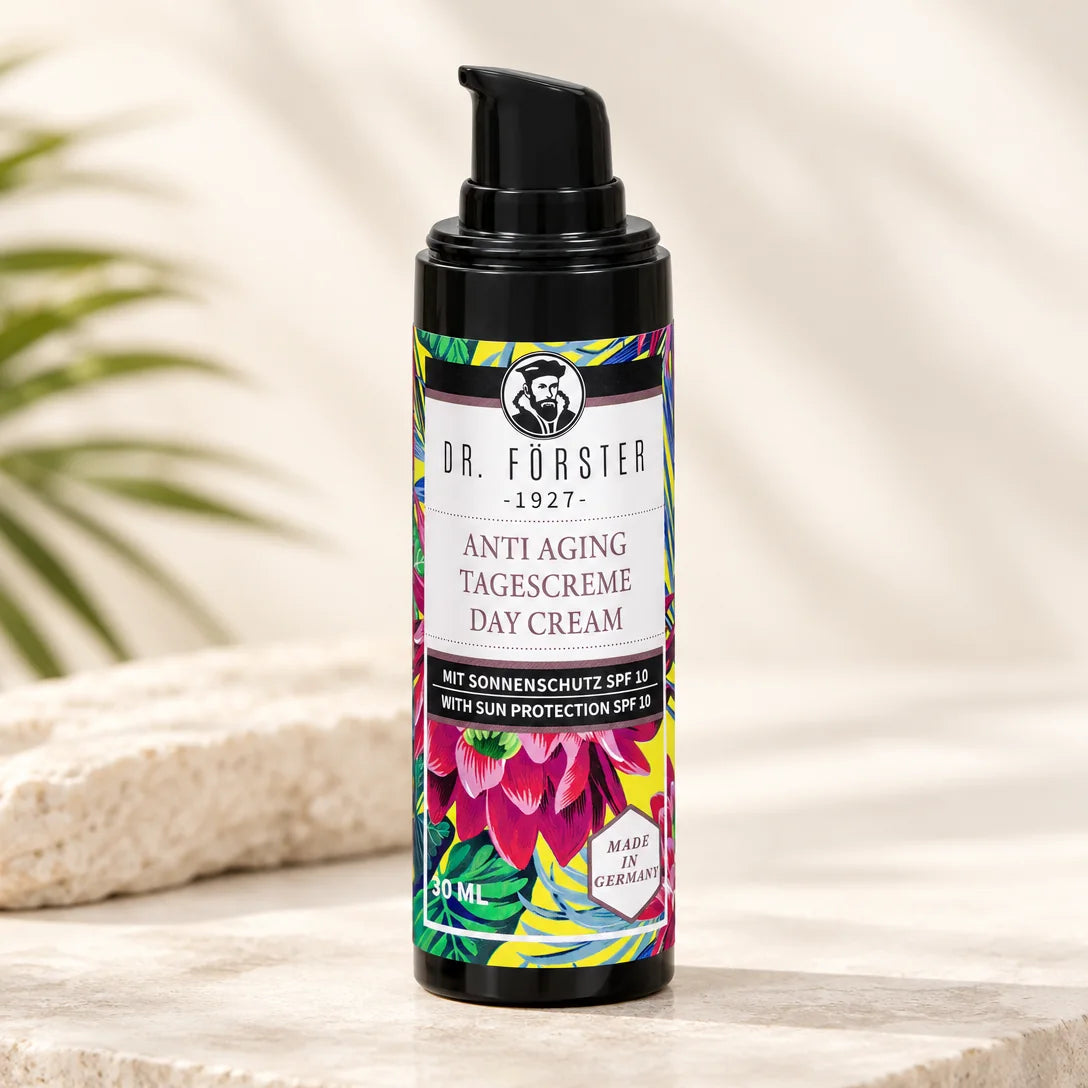
In short: A day cream with SPF 10 offers low sun protection. It suits everyday life with short spells outdoors when the UV index is low. If you spend longer outside, in summer, on holiday, in the mountains or in the snow, you need a dedicated sunscreen with a high SPF, such as SPF 50. This can be necessary in winter too, especially at altitude and on snow.
What the sun protection factor means
The sun protection factor (SPF) describes how well a product protects against UVB radiation, which is mainly responsible for sunburn. In its Recommendation 2006/647/EC, the European Commission set out four protection categories:
- Low: SPF 6 and 10
- Medium: SPF 15, 20 and 25
- High: SPF 30 and 50
- Very high: SPF 50+
According to the same recommendation, UVA protection should be at least one third of the stated SPF. You can recognise this by the circled UVA symbol on the pack.
Important: the stated SPF is measured in the lab with 2 milligrams of product per square centimetre of skin. According to Germany’s Federal Office for Radiation Protection (BfS), using half that amount can reduce protection by up to two thirds. Most people apply far less, especially with a day cream.
At a glance
- SPF 10 is low protection, for short spells outdoors in everyday life
- Longer in the sun: a dedicated sunscreen with a high SPF, such as SPF 50
- Protection from UV index 3 is recommended (BfS)
- Winter: in the German lowlands, usually no sunscreen needed; in the mountains and on snow, yes
- Reapplying maintains protection but does not extend it
Day cream with SPF: when it’s enough
A day cream with SPF combines care and basic UV protection in one step. That’s practical for office days, the commute or a quick errand. For longer periods outdoors, a low SPF is not enough.
Our Anti-Aging Day Cream SPF 10 is made for exactly this kind of everyday life. It contains UVA and UVB filters, without titanium dioxide or zinc oxide. Organic aloe vera juice comes first in the INCI, joined by organic shea butter, organic coconut water, a plant cell culture from raspberry leaves, hyaluronic acid and panthenol. It contains fragrance (parfum, linalool, limonene).
To be clear: SPF 10 is low sun protection. If you spend longer in the sun, also use a higher SPF.
Separate sunscreen: when you need it
You need a dedicated face sunscreen whenever you spend longer outdoors and the UV index is 3 or higher. From this value, the BfS recommends protective measures. In a German summer, the UV index reaches 8 to 9 according to the BfS, and up to 11 in the high areas of southern Germany. And: light cloud cover hardly reduces the UV index.
The Anti-Aging Sunscreen SPF 50 is a light oil fluid that you dose with a pipette. It feels silky, with no shiny film and no white cast. SPF 50 belongs to the “high protection” category. The fluid contains alcohol, natural orange peel essential oil as well as parfum and limonene.
How to apply sunscreen properly
- In the morning as the last skincare step: after serum and cream, before make-up.
- Apply generously: too little product reduces protection significantly.
- In good time: the BfS recommends applying sunscreen 20 to 30 minutes before going outside.
- Reapply: at least every two hours and after swimming or towelling off. According to the BfS, reapplying maintains effectiveness but does not extend the protection time.
- Don’t add them up: a day cream with SPF 10 and a sunscreen with SPF 50 do not make SPF 60. What counts is the product with the higher protection, applied in the right amount.
According to the BfS, sunscreens do not replace other protective measures. Shade, clothing, a hat and sunglasses come first.
Sun protection in winter: what really applies
In winter, UV exposure in the German lowlands is so low, according to the BfS, that no sunscreen is needed in everyday life. It’s a different story in the mountains and on snow:
- According to the BfS, UV radiation increases by about 10 percent per 1,000 metres of altitude.
- Fresh snow reflects up to 90 percent of UV radiation (BfS).
- For winter holidays in the mountains, the BfS recommends sunscreen with at least SPF 30, better 50 or 50+, plus lip protection and sunglasses marked UV400.
High sun protection also belongs in your luggage when travelling to sunny regions. So for a day on the slopes, a day cream with SPF 10 is no alternative to a sunscreen with a high SPF.
Sun protection in your routine
UV protection is especially important if you use retinol or other vitamin A skincare. Read more in Retinol or retinal: what is the difference? A vitamin C serum doesn’t replace sunscreen either, but it works well underneath, see Vitamin C serum: morning or night?
An everyday morning routine could look like this: Hyaluronic Serum, then the Day Cream SPF 10. For longer periods outdoors, add the Sunscreen SPF 50 as the last step. Note: the Morning Routine N°1 contains the Anti-Aging Day Cream without SPF. If you use it and spend longer outside, add a dedicated sunscreen.
Your skin deserves care in every detail. Since 1927.
Frequently asked questions
Is a day cream with SPF 10 enough in summer?
For short spells outdoors in everyday life, it can be. If you spend longer in the sun, you need a higher SPF, such as SPF 50.
Do I need sunscreen on my face in winter?
In the German lowlands, according to the BfS, it’s usually not necessary in everyday life. In the mountains, on snow and when travelling to sunny regions, it is, with at least SPF 30, better 50.
Can I combine day cream and sunscreen?
Yes. Apply the day cream first, let it absorb briefly, then apply sunscreen on top. The SPFs do not add up.
Do clouds protect against UV radiation?
Only to a limited extent. According to the BfS, light cloud cover hardly reduces the UV index.
How often should I reapply?
The BfS recommends reapplying at least every two hours, especially after swimming and towelling off. This does not extend the protection time.
Sources: German Federal Office for Radiation Protection (BfS): UV index, UV protection with sunscreen, UV protection in winter (as of 2026); European Commission Recommendation 2006/647/EC on the efficacy of sunscreen products. As of October 2026.