


In short: Retinol and retinal (retinaldehyde) are both forms of vitamin A. The skin converts retinol first into retinal and then into retinoic acid. Retinal is therefore one step closer to that conversion. Both are popular ingredients for mature skin, and both should be introduced slowly.
What is retinol?
Retinol is the best-known form of vitamin A in skincare. The skin converts it in several steps. Because some of it is lost along the way, retinol is rather gentle and a good place to start.
What is retinal?
Retinal, also called retinaldehyde, is the intermediate step between retinol and retinoic acid. Because one conversion step is skipped, retinal is considered the stronger form at the same concentration. In the INCI it is listed as Retinal.
Retinol and retinal compared
- Conversion: retinol becomes retinal and then retinoic acid; retinal only becomes retinoic acid.
- Getting started: retinol is usually the more comfortable choice for beginners.
- Tolerance: both can cause redness, tightness or flaking at first. Less is more.
How to introduce vitamin A into your routine
- Start with a few drops two to three times a week.
- Apply to cleansed, dry skin, avoiding the eyes and lips.
- Follow with a nourishing cream.
- Wear sun protection consistently during the day.
- Only increase once your skin has got used to it.
Always follow the directions on your product.
What does the EU say about retinol?
Since Regulation (EU) 2024/996, there are maximum levels for retinol and its esters in cosmetics: 0.3 percent retinol equivalent in face products and 0.05 percent in body lotions. Products with these ingredients carry a note that they contain vitamin A and that you should consider your daily intake.
Our Retinol Serum Booster
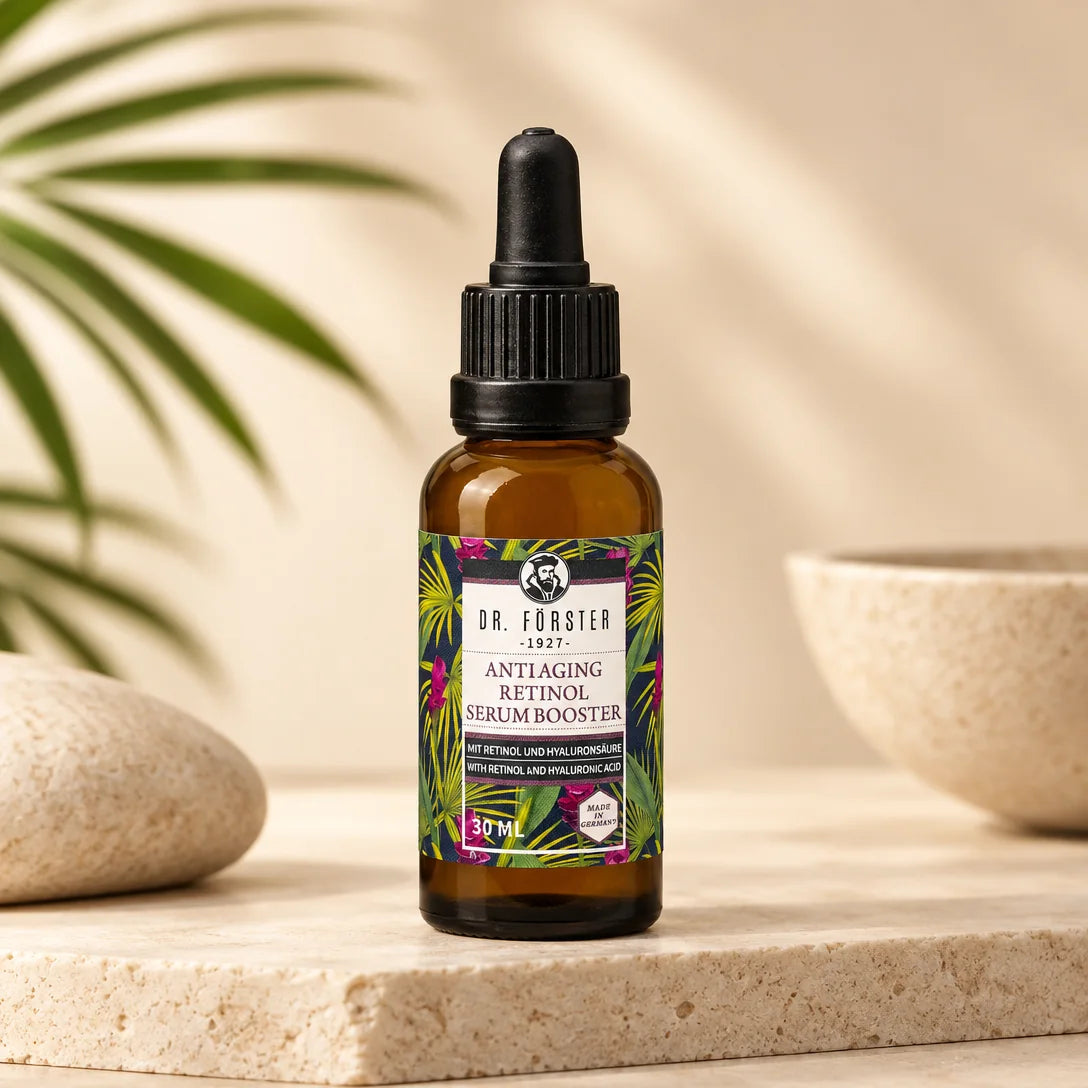
The thoughtfully formulated Dr. Förster Anti-Aging Retinol Serum Booster contains retinol and hyaluronic acid (Sodium Hyaluronate) on a base of carefully selected organic aloe vera juice, with no added water. Apply sparingly and avoid contact with the eyes.
Selected with care. Developed with ambition. Since 1927.
Frequently asked questions
Is retinal stronger than retinol?
At the same concentration, retinal is considered stronger because one conversion step in the skin is skipped. What matters most, though, is the formula and how well your skin tolerates it.
Can I combine retinol and vitamin C?
Many people use vitamin C in the morning and vitamin A in the evening. That way the two don’t get in each other’s way and the skin isn’t overwhelmed.
Do I need sunscreen when using retinol?
Yes. Sun protection belongs in every daytime routine that includes vitamin A.
Can I use retinol during pregnancy?
If you are pregnant or breastfeeding, talk to your doctor before using vitamin A skincare.
Sources: Regulation (EU) 2024/996 amending Cosmetics Regulation (EC) No 1223/2009. As of October 2026.